
Why Forex Trends Matter in Trading
In Forex trading, one principle stands above almost everything else: the Forex trend is your friend—until it bends or breaks. Understanding market trends is one of the most profitable skills a trader can develop, regardless of whether they scalp, day trade, or invest long-term.
Trends exist on all timeframes. You will find them on monthly, weekly, and daily charts for long-term trades; on 4-hour and 1-hour charts for day trading; and even on 5-minute and 3-minute charts for scalping. Learning how to read and follow these trends can unlock consistent opportunities that last minutes, days, or even months.
Trends Exist on Every Timeframe
One of the biggest advantages of Forex trading is its flexibility. The market operates 24 hours a day, 5½ days a week, giving traders from all backgrounds and lifestyles the chance to participate.
- Scalpers can ride trends that last minutes or hours
- Day traders focus on trends that last days
- Swing and position traders capitalize on trends that run for weeks or months
No matter your style, trends provide structure and direction—without them, trading becomes guesswork.
The 3 Essential Keys to Successful Forex Trading
Before placing any trade, every Forex trader must master three simple but critical foundations:
1. Identify Market Direction
You must be able to determine whether the market is bullish or bearish on any timeframe.
2. Use a Simple, Repeatable Entry Strategy
Complex strategies often fail under pressure. Simplicity leads to consistency.
3. Apply a Proven Exit Strategy
This is where profits are realized. You don’t get paid for entering trades—you get paid for exiting them correctly.
Without these three elements working together, long-term profitability becomes extremely difficult.
You Must Choose a Direction
To make money in Forex, you must take one side of the market—either buy (bullish) or sell (bearish). You cannot profit by holding both positions at the same time in a single trade. Doing so results in a net-zero position where every pip gained is also lost.
The good news is that the Forex market leaves visible clues through price action, structure, and trends. These clues allow traders to make educated decisions rather than emotional ones.
Trade the Trend—Never Fight It
Traders have different personalities. Some are aggressive and prefer scalping. Others are more patient and favor long-term trades. While your personality influences your trading style, trend direction applies to everyone.
Trading against the trend is like trying to swim upstream in powerful rapids—it’s exhausting, dangerous, and rarely successful.
One of the biggest mistakes traders make is trading in the wrong direction.
Successful traders align themselves with the prevailing trend and let the market do the heavy lifting.
Using Trendlines to Determine Market Direction
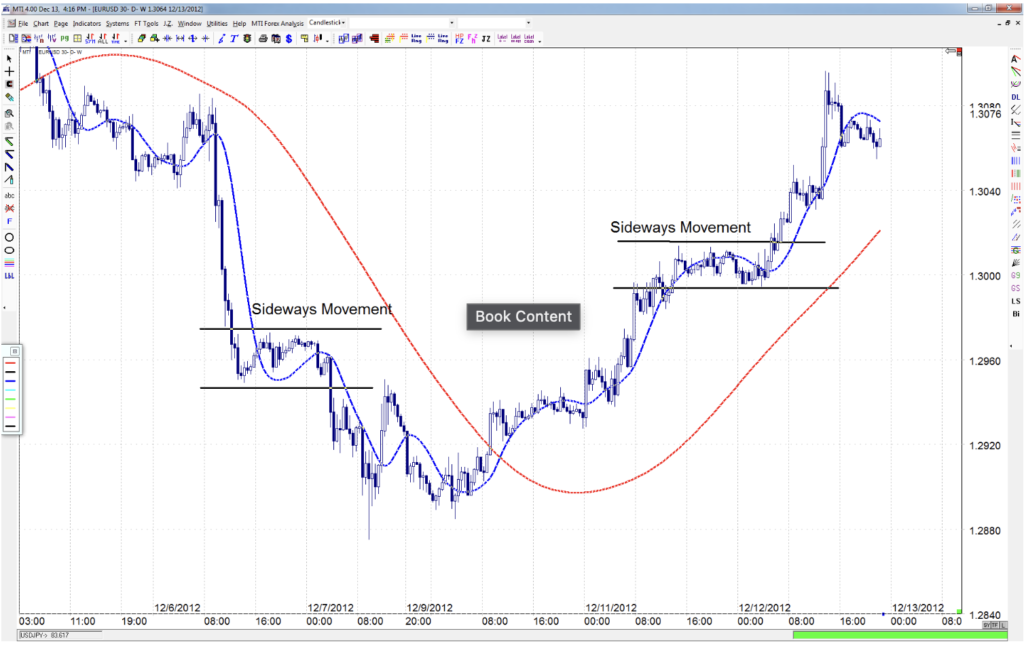
One of the most effective ways to identify trends is through trendlines. Trendlines visually show the direction of price movement and act as dynamic support and resistance levels.
Many professional traders use advanced charting software that includes automated trend indicators, which adjust in real time as the market moves. These tools reduce screen time and emotional decision-making while keeping traders aligned with the market structure.
When price consistently respects an inner trendline, the trend remains intact. A decisive break of the outer trendline, however, often signals a major trend reversal.
The Importance of Drawing Trendlines Correctly
If your charting platform does not include automated trendlines, you must learn how to draw them correctly. This is a skill many traders underestimate.
Incorrectly drawn trendlines can:
- Create false trade signals
- Lead to poor entries and exits
- Turn winning trades into losing ones
Master traders treat trendline drawing as both a technical skill and an art. Still, even experienced traders benefit from automated tools that continuously adapt to changing market conditions.
Multi-Timeframe Analysis: The Key to Avoiding Costly Mistakes
Professional traders always analyze multiple timeframes.
Here’s why it matters:
A pullback toward an uptrend line on a daily chart might be a 200-pip move. On a 1-hour chart, that same move appears as a strong bearish trend. Traders who only analyze the lower timeframe may enter short positions—just as the higher-timeframe trend is about to resume upward.
When price reaches the daily trendline, the 1-hour chart often reverses sharply, leaving unprepared traders confused and at a loss.
This is why higher timeframes always control lower timeframes.
Final Thoughts: Let the Trend Work for You
Forex trading does not reward force or ego—it rewards patience, discipline, and alignment with market direction. By learning how to identify trends, draw or use reliable trendlines, and analyze multiple timeframes, you dramatically increase your probability of success.
At GiantPips, we emphasize trading with the trend, not against it, because the market already provides the momentum—you simply need to follow it.
Trade With The Best Broker
if you want a broker that’s built for speed, stability, convenience with solid global licensing across multiple jurisdictions with reliable support, fast trade execution, speedy withdrawals, Exness is the best option to consider.