
Understanding Trading Consolidation in Forex
Forex market consolidation is important in financial markets because price movement can be simplified into three states only:
- Uptrend
- Downtrend
- Sideways (Consolidation)
Whenever price is not clearly trending upward or downward, it is called Forex market consolidation iemoving sideways, a phase commonly referred to as consolidation, accumulation, or bracketing.
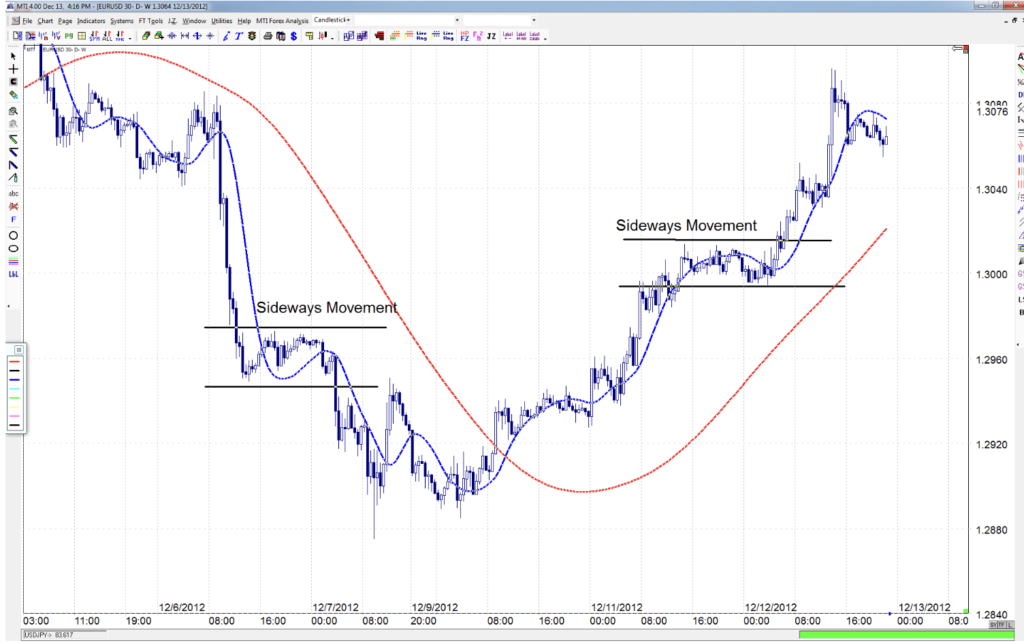
Many traders mistakenly believe profits are only made during strong trends. In reality, markets spend most of their time consolidating, and traders who understand this phase can extract consistent profits from it.
Why Sideways Markets Matter More Than You Think
Sideways price action is not random or useless movement. It is often a pause within a larger trend, where institutions accumulate or distribute positions before the next major move.
In fact:
- Trending-only strategies often fail during consolidation
- Traders who ignore ranges experience repeated stop-outs
- Range-aware traders adapt and thrive
💡 Pro Tip from GiantPips:
To trade professionally, you should use two complementary trading systems:
- A trend-following strategy for directional moves
- A consolidation or range-trading strategy for sideways markets
Mastering both gives you an edge in all market conditions.
How Consolidation Creates Support and Resistance
When the market consolidates, price repeatedly reacts between equal levels of support and resistance, forming a clearly defined trading range.
The size of this range depends on:
- The currency pair
- The timeframe being analyzed
For example:
- H1 charts: ranges as small as 20–60 pips
- Daily charts: ranges of 300–800+ pips
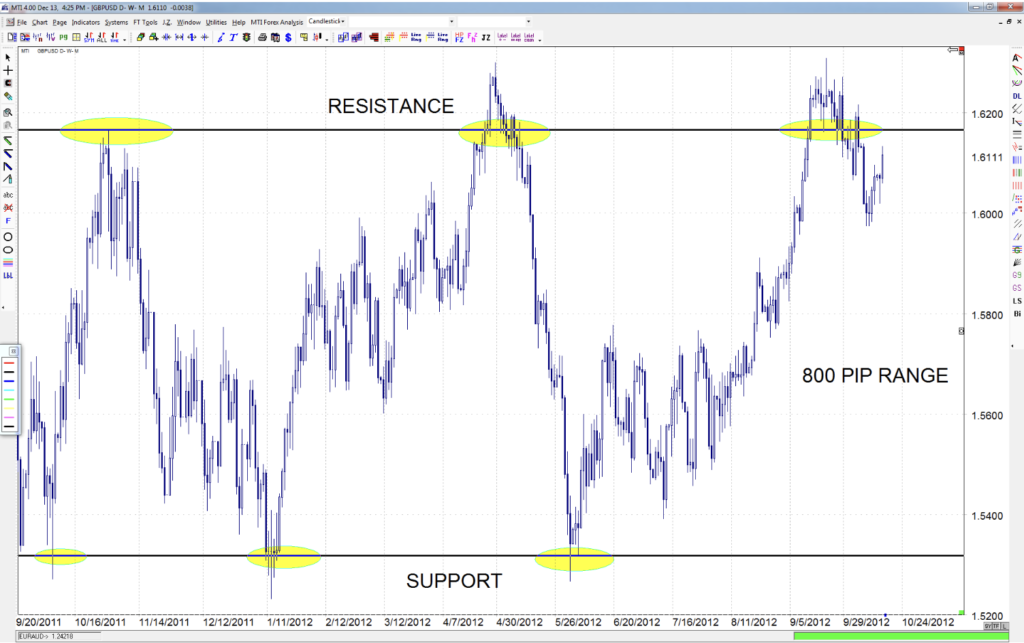
Understanding these zones allows traders to:
- Buy near support
- Sell near resistance
- Avoid false breakouts
This is a core concept taught inside GiantPips Academy.
Key Reasons Why Markets Enter Consolidation
1. Fundamental News Anticipation
One of the main causes of consolidation is market indecision ahead of major economic announcements.
Examples include:
- Interest rate decisions
- Inflation (CPI) reports
- Employment data (NFP)
- Central bank speeches
When traders and institutions pause to wait for new information, trading volume drops — and the market begins to move sideways.
This type of consolidation usually forms tight ranges, especially on lower timeframes.
2. Reduced Market Participation
When large players temporarily step away from the market:
- Volatility decreases
- Liquidity tightens
- Price compresses into narrow ranges
These small consolidation zones often appear on:
- 30-minute charts
- 60-minute charts
Typical range size:
- 20–60 pips
⚠️ These zones often precede powerful breakouts, making them critical for both range traders and breakout traders.
How to Trade Consolidation Profitably
Instead of avoiding sideways markets, professional traders learn to:
- Identify accumulation zones
- Trade support and resistance precisely
- Scale positions intelligently
- Prepare for breakout expansion
Sideways trading can be just as profitable as trend trading when approached with the right mindset and tools.
At GiantPips, we teach traders how to:
- Combine technical structure with fundamentals
- Read consolidation as institutional behavior
- Adapt strategies to any market condition
Final Thoughts: Don’t Fear Sideways Markets
Consolidation is not a market problem — it’s a market opportunity.
If you can correctly identify when price is:
- Accumulating
- Bracketing
- Compressing
You gain a powerful edge that most retail traders ignore.
📈 Master consolidation, and you’ll unlock consistent profitability in forex.
Trade With The Best Broker
if you want a broker that’s built for speed, stability, convenience with solid global licensing across multiple jurisdictions with reliable support, fast trade execution, speedy withdrawals, Exness is the best option to consider.